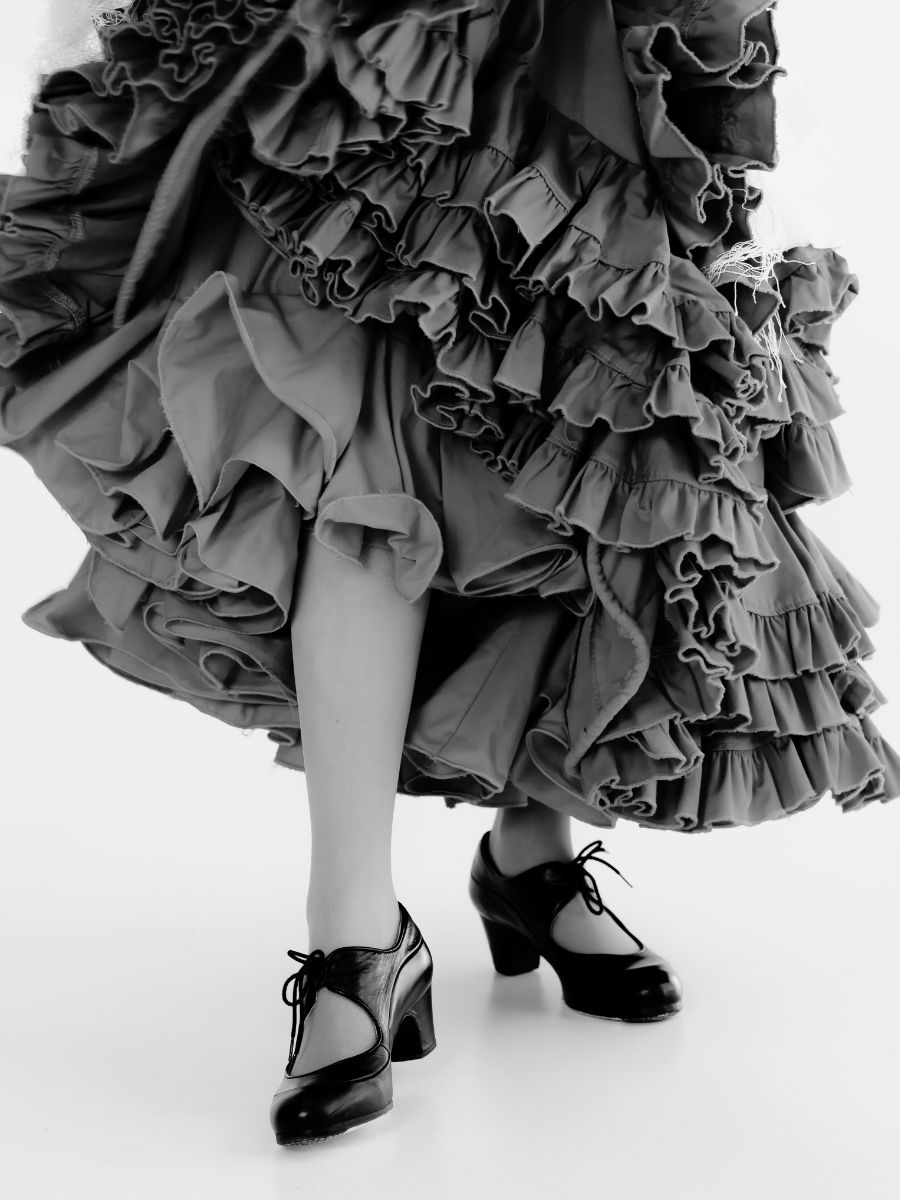
Flamenco Dance
This section of the studio is currently in development. Soon you will find clear and structured flamenco dance courses here, designed for both beginners and dancers with some experience who want to deepen their technique, coordination, rhythm and expression.
Upcoming lessons will include:
- Complete choreographies in different palos
- Breakdowns of steps, arms, rhythm and compás
- Slow-tempo and full-tempo practice videos
- Musicality and expressive interpretation
Thank you for your patience — new lessons will appear here soon.
About Flamenco Dance
Flamenco dance is a powerful combination of rhythm, expression and physical precision. Every palo (style) has its own character — from the strength of the Farruca to the elegance of the Alegrías.
In flamenco, movement and music are inseparable: the dancer responds to the guitar, the singing and the compás, creating a dialogue between rhythm and emotion. Even beginners start developing this connection early through clear patterns, structured steps and accessible rhythm exercises.
Structure and Technique
Flamenco choreographies often follow a clear sequence that helps dancers understand the flow of the music. A typical structure may include:
- Salida / Entrada – the beginning of the dance, entering the music
- Marcajes – marking steps that introduce the style and rhythm
- Vueltas – turns used for transitions and accents
- Escobilla – a footwork section with growing intensity
- Cierre – a short finishing moment that closes a musical phrase
These elements appear in different forms depending on the palo, but the idea remains the same: structure helps dancers build confidence, coordination and musical understanding.
Expression
Flamenco is not only about steps — it is about personal expression. Posture, intention, arms, timing and presence all play an important role. As you progress, you develop your own voice within the dance.